• Skip to primary navigation
  • Skip to main content
  • Skip to footer
Engineering Ventures

Engineering Ventures

Civil and Structural Engineering

  • Home
  • Firm
    • Awards
  • Team
  • Services
  • Portfolio
  • Join EV
  • Blog
  • Pay Invoice
  • Contact Us

Engineering Ventures

Engineering Ventures, PC. Announces New President

January 1, 2024 by Engineering Ventures

January 01, 2024 Burlington, VT
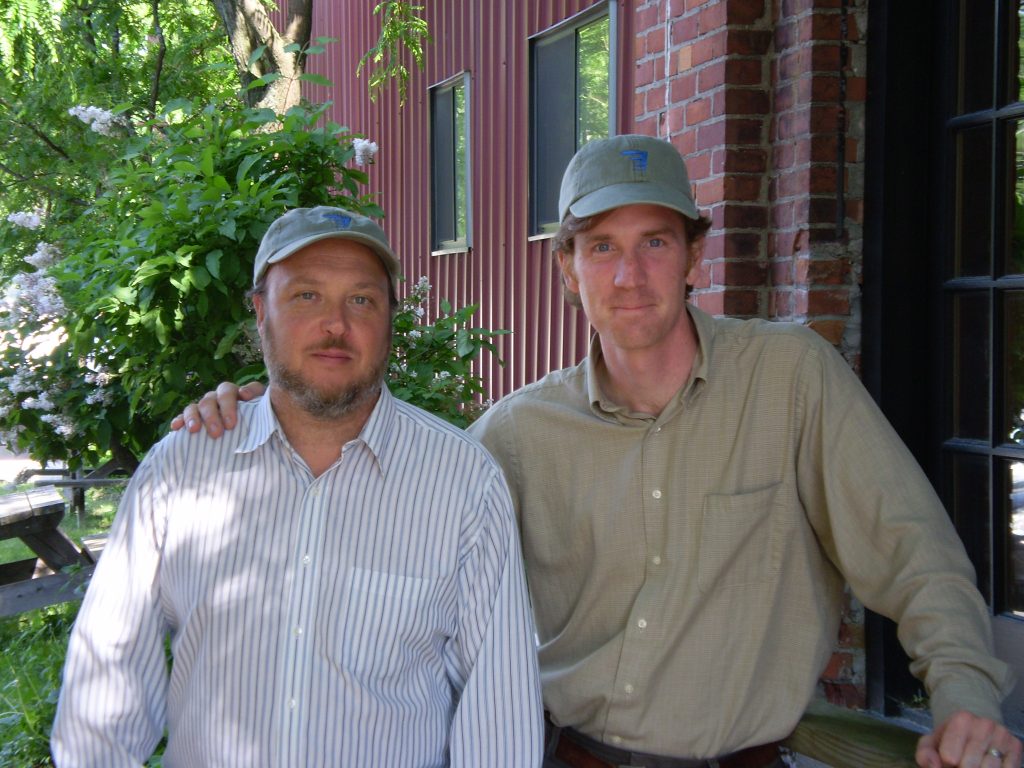
It is with great excitement that we announce Kevin Worden, P.E. will be Engineering Ventures’ new President beginning January 1st, 2024.  Kevin has been with Engineering Ventures since 1998 and has served as Vice President since 2007.  As president, Kevin looks forward to strengthening long term relationships in the communities that EV serves and focusing on career development and recruitment of the most talented engineers in the region at Engineering Ventures.

Bob Neeld, P.E. is passing the baton after an amazing 16-year tenure! He will continue working at EV to further his legacy of preserving historic structures, advocating for climate resilient design, and guiding young engineers. In his 40 years of consulting engineering in Vermont, Bob has had a significant impact. He has been integral in making EV one of the most respected civil and structural engineering firms in Vermont. Bob has managed projects including multi-story buildings, commercial facilities and offices, hospitals, public buildings, unique residences, and many historic restoration projects.

Bob was a key advocate for making historic preservation one of EV’s core values. He is now widely acknowledged as the one to call when facing evaluation, preservation, and renovation projects for structures with historic significance. Bob’s work with historic structures includes spending time in Mississippi helping with the aftermath of Hurricane Katrina, and in Cuba to aid in the historic preservation of churches.  He has recently been working with the Preservation Trust of Vermont to provide building assessments related to improving flood resilience of historic buildings.

Kevin, a Worcester Polytechnic Institute graduate, contributes almost 30 years of experience in sustainable civil engineering design, site planning, and permitting on a wide range of projects. Kevin was the 2001 Vermont Young Engineer of the Year and is a leader in sustainable design. 

He has consistently been an organized, thoughtful, and essential part of our leadership team. Our staff is excited to see where his creativity will take our company next!

In his tenure at EV, Kevin has worked on and facilitated a multitude of projects with major impacts on the communities they’re located in. They include the ACEC Award Winning Wentworth & Wilder housing project, one of many affordable housing projects Kevin has assisted with. He has also been instrumental in guiding our civil team to help local schools get up to date on permit and stormwater requirements.

Kevin is also widely known for his master planning capabilities. His knack for thinking big picture makes him an invaluable asset on large campus project teams. This is illustrated in the completion of Dartmouth College’s West Campus Improvements, the King Arthur Flour Campus, the Wind NRG Facility, and the Seventh Generation Lake & College building project, among many others.

Filed Under: Uncategorized

An Inside Look at Vermont’s Infrastructure Report Card

September 12, 2023 by Engineering Ventures

Re-evaluating Vermont’s Stormwater Infrastructure in Light of the 2011 and 2023 Floods

Co-Authored by Tyler Barnard, EV Civil Staff Engineer

Every four years the Vermont Section of the American Society of Civil Engineers (ASCE) publishes the Infrastructure Report Card. It serves to educate the public and elected officials on the status of Vermont’s infrastructure using a graded scale from A, to F. The reporting on condition and critical need is an indispensable asset, and in light of the recent flooding events affecting Vermont communities, we feel it is important to champion this work.

The 2023 Report was released in February of this year. Across the board, it praises government spending on the American Rescue Plan as an effort to make our state more resilient to future storm events.

Before
After EV Upgrade

Tyler Barnard from our civil engineering department co-authored the Stormwater Section of the 2019 and 2023 Report Cards. He, along with other authors are volunteer members of the ASCE Board of Directors and members of the community.

They dedicate time and resources to this report, which is used by community leaders to better prioritize limited funding. Overall, this helps to improve the condition, capacity, operations, maintenance, safety, innovation, and resilience of critical infrastructure.

The 9 Infrastructure Categories

  • Aviation
  • Bridges
  • Dams
  • Drinking Water
  • Energy
  • Roads
  • Solid Waste
  • Stormwater
  • Wastewater

Stormwater and Climate Resilience

Stormwater scored a D+ in 2019, and C- in 2023. While things are improving, anything in the C range is considered “Mediocre: Requires Attention.”

“The infrastructure in the system or network is in fair to good condition; it shows general signs of
deterioration and requires attention. Some elements exhibit significant deficiencies in conditions and
functionality, with increasing vulnerability to risk,”
– Vermont’s Infrastructure Report Card

Historically, stormwater control and treatment has been lower on the public’s priority list than the roads we commute on and the quality of the water we drink. However, it has quickly jumped to the front of everyone’s minds as climate change affects weather patterns and rainfall events, and we brace for future floods. So what can we do to help ease climate concerns, and boost resilience?

Click here to learn more about the dry floodproofing
(depicted above!)

Solutions to Raise the Grade

The following is pulled directly from the 2023 report.

VT-ASCE makes the following recommendations to raise the grade of Vermont’s stormwater:

  • Establish a state budget committee to effectively define and fund short-term and long-term needs.
  • Establish scale-appropriate clean water utilities at the municipal level that provide a consistent and dedicated labor force for stormwater management improvements and maintenance.
  • Establish an easily accessible statewide system that inventories the size, condition, capacity, procedures for operations and maintenance, and capital needs of all public and privately-owned stormwater assets.
  • Improve stormwater infrastructure through retrofit of older systems that provide minimal water quality benefit and continue to embrace innovative water quality treatment practices for future new development and redevelopment.
  • Fund research in stormwater management and treatment technology to improve water quality and reduce capital expenditures. This includes exploring options to address maintenance and monitoring of stormwater infrastructure, whether public or private.
  • Develop additional funding sources for stormwater, GSI, and LID projects.

The full report goes in depth on the condition and capacity of existing stormwater infrastructure, how the state and municipalities are operating and maintaining their networks, and future funding and needs (pages 67-73). The full report can be found at: https://infrastructurereportcard.org/state-item/vermont/

Filed Under: Uncategorized

Library and Community Center, South Burlington, VT

August 1, 2023 by Engineering Ventures

2023 ACEC Vermont Engineering Excellence Awards Merit Recipient: Water Resources

The City of South Burlington has long aspired to have a city center that promotes prosperity, nurtures growth, and anchors their community. After years of planning the South Burlington City Center is now a reality. At the core of this new downtown is the recently completed municipal building that combines City offices with a library and community center. This new building provides an activity hub for the community and is designed to tie together the adjacent residential, educational, and commercial uses along the newly reconstructed Market Street.

The initial challenges presented were space limitations and unusual phasing issues. Allard Square had recently finished construction for their underground parking access, which ran directly through the library’s site. In addition, the traffic flow and circulation for the elementary school would be impeded if they weren’t given due consideration. This required working with adjacent property owners and the Market Street team to find solutions and make adjustments in real time. For Allard Square, we were able to work with their staff and the City to route a new connection to the garage level.

Similarly, the primary access drive to Marcotte Central School ran through the building footprint, requiring a new route. The project also required parking and stormwater treatment on school property to the north. This required parking lot changes and replacement of an existing stormwater system. Working with the school district and City staff we were able to reconfigure parking and driveways to maintain the same number of parking spaces and to improve circulation for the school. We were also able to design stormwater systems that exceeded requirements of both the City and State while bringing the school site close to compliance with the upcoming 3 AC stormwater requirements.

Systems for stormwater treatment and flow control were challenging for this project due to these tight site constraints as well as the need to replace existing storm systems and manage both pre and post construction discharge to Market Street. Although soils on site were sandy, groundwater depths prevented the use of infiltration-based systems for water quality treatment. To tackle this impediment with minimal impact on the adjacent elementary schools’ operations we designed and implemented five high-rate biofiltration systems. These treated surface runoff and allowed stormwater to be fully treated above the seasonal high-water table. The treated runoff then flowed to one of two large underground storage galleries. This new system enabled us to provide groundwater recharge without relying on filtration in the underlying soils.

Coordination of the project design with adjacent stakeholders required ongoing communication and working with their project teams. Our solutions were designed to satisfy the needs of these neighbors while also meeting the project’s objectives. This level of communication and collaboration made our typically invisible role as site engineers central to the discussion, enhancing everyone’s understanding of how these elements are interrelated. In addition, the project location – central to the new downtown and elementary school makes these stormwater systems highly visible to city residents.

This project demonstrates a way to fit and retrofit high value stormwater treatment and groundwater recharge onto a site with a minimal surface footprint while also providing a high level of storage and flow control. The project location – at the new city center and next to a library and elementary school makes these systems highly visible to a large portion of City residents, including overviews from the new building. The proximity to the school itself offers educational opportunities.

In July of 2021, this facility opened to the public. The original RFQ indicated that this was to be a “catalyst project”, and to provide a central gathering place for residents.  Given the rate of construction on Market Street and the amount of use seen by this new building, those goals have been achieved.

Filed Under: Uncategorized

Engineering with Mass Timber: The CLT Special

June 26, 2023 by Engineering Ventures

Cross Laminated Timber: What Can it Do for Our Communities and Environment?

Rendering Courtesy of VIA

The construction industry is responsible for approximately 40% of the world’s carbon emissions. Of this 40% the fabrication, transportation, and assembly of concrete and steel are major contributing factors. Climate policy, climate action, and climate awareness has us all asking ‘what can we do’ to combat these emissions and support our collective future? Enter: Mass Timber.

Mass Timber is known industry-wide as a catch-all category for environmentally sourced Engineered Wood Products (EWPs) manufactured by bonding multiple layers of wood together. The strength of traditional lumber depends on the direction of it’s grain in relation to an applied load. Mass timber products are engineered to maximize the wood’s inherent strength for specific load applications.

CLT: A Mass Timber Product

Mass Timber products are widely accepted as sustainable building materials. This is due in part to the fact that wood is a renewable resource, and that forests and wood-made-products are considered carbon-sinks that capture and remove carbon from the atmosphere. Beyond their comparably low carbon footprint, EWPs are durable, versatile, and are designed to reach strength ratings comparable to non-wood materials (e.g. concrete and steel) while simultaneously maintaining lighter self-weights. Common varieties of mass timber include Glulam (Glued-Laminated Timber or GLT), Nail Laminated Timber (NLT), Dowel Laminated Timber (DLT), and Cross Laminated Timber (CLT).

CLT is an engineered wood product that is pre-manufactured by gluing together layers (a.k.a. plies) of 2x lumber with alternating grain orientations and sealing the lot together with a press. Typically, the CLT panel’s two outer plies are oriented to span between primary supporting elements (whether vertical or horizontal), and inner plies are oriented perpendicular (and parallel) to outer plies – depending on how many plies each CLT panel is. (Note that odd-number-ply panels are most common). The more plies, the stronger the panel, and the further it can span.

This unique alternating grain/ply-pattern enables the CLT wood panel to achieve multi-directional strength ratings (unlike traditional lumber with just one). The effect is that CLT panels act like elevated, reinforced concrete slabs which explains why these panels are frequently used as structural walls, floors, and roofs. So, what’s the catch? CLT is both sustainable and strong, but is it a headache to construct? Nope! In fact, because CLT is pre-manufactured, it minimizes on-site construction waste.

Vermont’s First Ever Commercial Building to Utilize CLT

An example of a mass timber  success story is one of Vermont’s first-ever commercial buildings that utilizes CLT – the Tang Science Annex at the Fairbanks Museum in St. Johnsbury – designed and detailed by our very own structural team.  Here, by using CLT panels for the floors and glulam for the beams and columns, in lieu of more traditional materials like concrete/metal deck floors, steel beams and columns – the new building’s structural system material carbon footprint is reduced by approximately one third.

A structure’s carbon footprint is measured by assessing the environmental impact of manufacturing the materials used in a building’s construction (Environmental Product Declarations – i.e. EPDs) as well as by considering the life-span and performance of these materials over time (Life Cycle Assessment – i.e. LCAs). This helps to answer questions like: ‘How much carbon was emitted while manufacturing this product and transporting it to site?’ and ‘How long does this product last and how much carbon does it remove from or emit into the atmosphere during its lifespan? ’  These measurements enable stakeholders to evaluate and compare the impact that certain products have on both environmental and human health and to make informed decisions that align with their own climate agendas.

Choosing the Right Species

Most EWP and CLT manufacturers have their own pre-selected species with pre-determined EPDs. The CLT panels used at the Tang Science Annex at the Fairbanks Museum utilized CLT made from local species (Eastern Hemlock) that was recently tested at UMass Amherst with support from the Massachusetts Executive Office of Energy and Environmental Affairs. This process allowed panels made from locally sourced lumber to be certified through the American National Standards Institute (ANSI) and the American Plywood Association (APA) to meet the industry standard PRG 320 performance requirements. (2).

The feat of this certification is twofold. Not only does it (theoretically) reduce carbon emissions by locally sourcing lumber (that doesn’t have to travel as far to get to site), but it also appropriates low-grade wood that is generally overlooked by the lumber industry for structural applications. The result creates a market for such material and allows room for other species to regrow thereby promoting our forests’ health. (3).

Engineered Wood Products are the rising stars of the sustainability-minded Structural, Architectural, and Construction industries. But despite their potential, various obstacles to their successes persist. The shortage of Mass Timber manufacturers located here in the Northeast requires EWPs to travel further distances from the source to the site – thereby increasing its carbon footprint. Added travel distances increase shipping and other logistical costs which disproportionately affects smaller projects and can make their use uneconomical.

Nonetheless, designing and constructing with CLT and other EWPs is another tool in our climate-change-fighting-toolbox that has great potential to positively impact our collective climate future – on both local and universal levels. We at Engineering Ventures remain hopeful that projects like the Tang Science Annex at the Fairbanks Museum will continue to set an example – and a new standard – for sustainable, economical, and innovative design practices here in the Northeast.

Authored By: Clark, Jessie and Russ!

SOURCES

World Green Building Council. Bringing embodied carbon upfront. Coordinated action for the building and construction sector to tackle embodied carbon; World Green Building Council: London, UK, 2019. https://search.informit.org/doi/epdf/10.3316/informit.985354490427057

Kaboli, H; Clouston, P; Lawrence, S; Feasibility of Two Northeastern Species in Three-Layer ANSI-Approved Cross-Laminated Timber; ASCE, 2020.

Hellman, R. The Fairbanks Museum Tests Innovative Wood product in its new addition. Seven Days. https://www.sevendaysvt.com/vermont/the-fairbanks-museum-tests-innovative-wood-product-in-its-new-addition/Content?oid=36008211 (2022, July 28).

Filed Under: Uncategorized Tagged With: clt, cross laminated timber, engineering, environmental product devlaration, epd, mass timber, structural engineering

Touring Oakledge

March 4, 2020 by Engineering Ventures

Two of EV’s administrative team went on a snowy tour of 65 Oakledge. Meg Dowling and Katherine Rudzki were led by Bob Neeld through this single-family home. It is the size of a medium commercial building.

First stop was through a makeshift doorway into the garage. The team wandered through halfway finished hallways, stepping over tiny canyons that will hold radiant heat tubing. From the garage, they found themselves in a grand entryway.

Bob walking across the radiant heat floor panels in the front entryway.

From there, the team walked into what will be the dining room. It is here that one can see what EV’s team of structural engineers can do. There are steel beams visible going up and over the room. These beams are holding up the building, and they also cantilever outward towards the lake to create a deck. This is an elegant way to incorporate the structural elements of the building into a physical element of the building.

Two of the cantilever beams (B/3 and B/4). The porch outside of the windows is covered by a deck supported by these beams.

The team moved upstairs to check out just how sturdy the second floor might be. Bob identified an area of the floor on top of a steel beam and told Meg and Katherine to jump on it. The floor had no give whatsoever! That’s the power of structural engineering!

Our Financial Systems Manager, Meg, was thrilled to see what the inner workings of such a big house would look like. For projects like this, she only sees the outcome of billing and invoices. Katherine, EV’s Marketing Coordinator, was excited to see just what structural engineering looks like in a home. So many of her project photos are of the completed building, most of the time she can’t point out from the outside what her coworkers have done.

These steel beams will assist with lateral wind loads.

The team are excited to see what the completed building looks like!

Representing EV! (Left to right – Meg Dowling, Katherine Rudzki, Bob Neeld)

Filed Under: Uncategorized

Libraries Sweep the 2020 Best of the Best Awards

February 24, 2020 by Engineering Ventures

Two EV projects won Efficiency Vermont Best of the Best awards at their Better Buildings By Design conference. The Pierson Library (Vermont Integrated Architecture) in Shelburne, Vermont and the Worthen Library (Wiemann Lamphere) in South Hero, Vermont both won awards for energy efficiency.

According to a recent Gallup poll, library attendance has outpaced trips to the movie theater over 2019. In a parallel trend, libraries all over Vermont are getting makeovers. On top of these two buildings, South Burlington, Vermont will soon have a new combined community center, city hall, and library of their own.

The Pierson Library in Shelburne was given both the Large Commercial Honor Award and the People’s Choice Award (chosen by conference attendees). The old building was torn down to construct a modernized and energy efficient library. It opened in September 2019, and since then the library hours have expanded to keep up with demand.

The Worthen Library in South Hero used to be located in the town’s elementary school. Because of this, its hours were dictated by when the school was open. Town leaders wanted the facility to better service the community with extended hours, and to have the capability of becoming net zero in the future. The new library accomplishes exactly that! This library was given the Small Commercial Honor Award at the Efficiency Vermont conference.

Engineering Ventures is proud to be a part of the future of energy efficiency in Vermont!

Filed Under: Uncategorized

  • « Go to Previous Page
  • Page 1
  • Page 2
  • Page 3
  • Page 4
  • Page 5
  • Interim pages omitted …
  • Page 8
  • Go to Next Page »

Footer

Saratoga Springs, NY

368 Broadway, Suite 11
Saratoga Springs, NY 12866
(518) 205-9141

Lebanon, NH

85 Mechanic Street, Suite E2-3
Lebanon, NH 03766
(603) 442-9333

Burlington, VT

208 Flynn Avenue, Suite 2A
Burlington, VT 05401
(802) 863-6225

  • Facebook
  • Instagram
  • LinkedIn

Copyright © 2026 Engineering Ventures – All rights reserved – Website by Stride Creative Group.